Do you qualify for help from the federal government? Millions of Americans ask that question every year, and the answer depends on a mix of income rules, family size, and where you live. In this guide, we walk through the major government assistance programs in the United States. They cover healthcare, cash, food, housing, and education — programs that touch millions of lives. Every figure here comes from official government data. We present it the way the nonpartisan organization USAFacts does: just the numbers, so you can make up your own mind.
To set the scale: in 2024, the federal government spent $6.8 trillion. A significant share of that spending flows through programs that support people based on their income. These programs fall under the official label “means-tested.” It simply means the government measures your income — and sometimes your assets — against a limit before you can qualify. Not every program uses the same limit. Some, like Pell Grants or the Child Tax Credit, reach people well above the poverty line. Others, like SNAP (food stamps) and Medicaid, focus on people living much closer to it.
What Are Means-Tested Programs?
Means-tested government assistance programs exist across five big areas: healthcare, cash assistance, food, housing, and education. The federal government sets the ground rules for each program, but states also add their own rules. As a result, who gets help — and how much — can look different from one state to another.
This matters because these programs don’t all serve the same people. Some help children, some help working families, some help the elderly or people with disabilities. There is overlap — the same family might use two or three programs at once. As a result, there is no single headcount of “how many Americans use government assistance.” The data below treats each program on its own terms.
How the Government Measures Poverty
Almost every means-tested program starts from the same question: who counts as living in poverty? The government answers it with a formula called the official poverty measure. If your income falls below a certain threshold, you count as living in poverty. The Census Bureau adjusts the threshold for inflation each year. Still, it does not account for differences in the cost of living from one place to another.
Each year, the Department of Health and Human Services publishes poverty guidelines built on that formula. These guidelines help decide who qualifies for government assistance programs like SNAP, Medicaid, and Head Start. In 2025, the poverty line for a family of four was $32,150. Many programs set their eligibility limits as a multiple of that number. For example, children can qualify for Medicaid if their family earns below 133% of the poverty guideline.
So how many people fall below the line? Since the 1960s, the poverty rate has stayed between 10% and 15% of households. In 2024, it was 10.6% — about 36 million people. Poverty rates also differ by race and ethnicity. For example, 18.4% among Black Americans and 15% among Hispanic Americans. Among Native Americans, the rate is 19.3%, compared with 7.6% among non-Hispanic whites. Non-Hispanic whites are the largest group in the country, though — about 57.5% of the population. As a result, they also make up the largest share of people living in poverty, roughly 40%.
Healthcare: Medicaid and CHIP
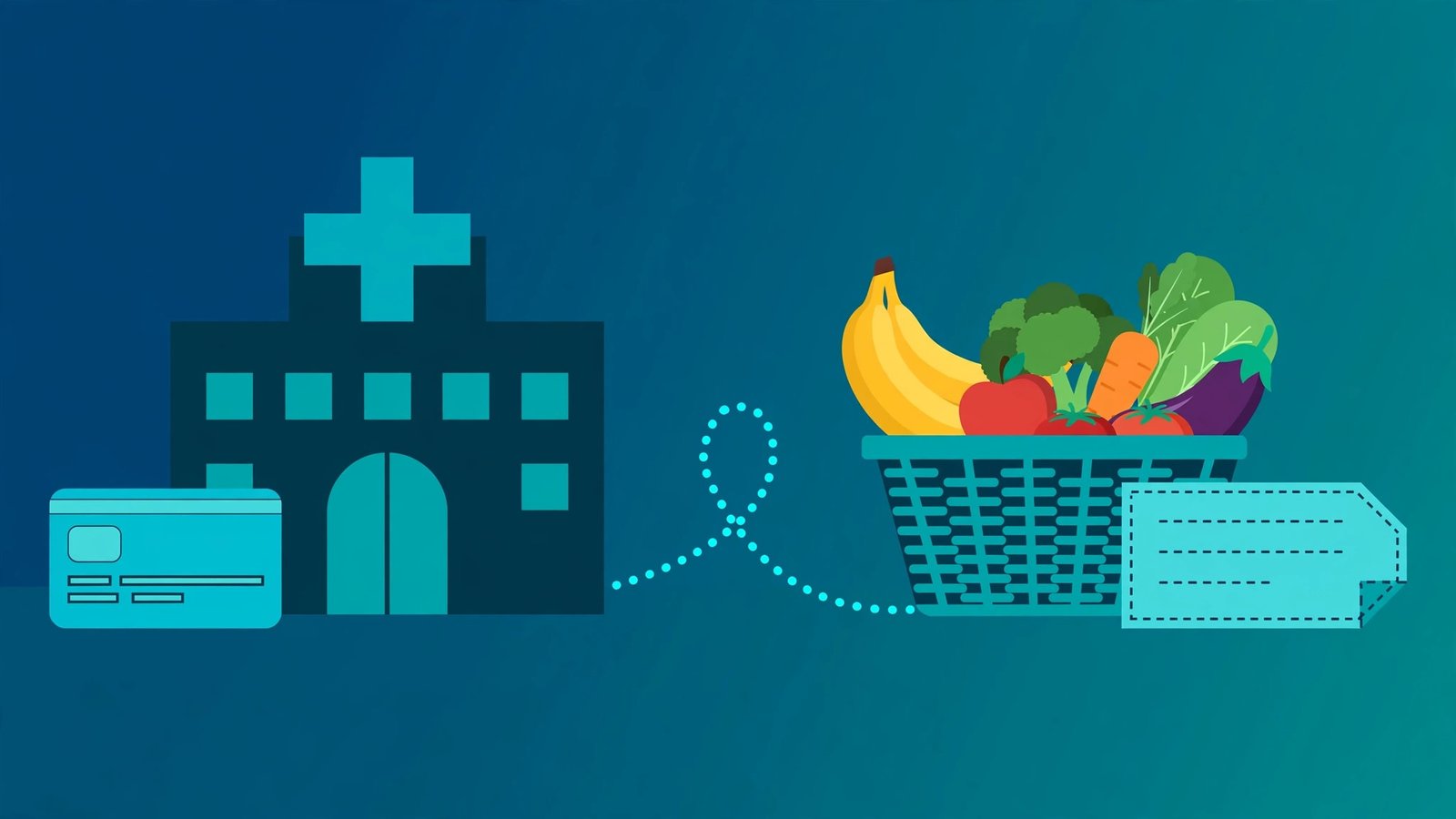
When it comes to healthcare, two programs do most of the work for low-income Americans. They are Medicaid and CHIP, the Children’s Health Insurance Program. Medicaid covers low-income children and adults, pregnant women, people with disabilities, and seniors who need long-term care. CHIP covers children whose families earn just a little too much to qualify for Medicaid. Since the Affordable Care Act, many states expanded Medicaid to cover low-income adults without children. The exact rules still vary from state to state, though.
The scale is enormous. In 2024, Medicaid covered 89 million people, and CHIP covered 7.2 million — more than 90 million people combined. Medicaid alone is the nation’s largest health insurer. It cost the federal government about $618 billion in 2024, and CHIP added another $19.9 billion. Together, that is nearly $640 billion — about 9% of the federal budget. Adding in state contributions, total spending reached nearly $900 billion in 2023. That is the most recent year with complete state data. In many states, Medicaid is now the single biggest budget item — larger even than K-12 education.
Cash Assistance: TANF, EITC, Child Tax Credit and SSI
Cash assistance programs put money directly into people’s pockets. Four of the biggest are TANF (Temporary Assistance for Needy Families) and the EITC (Earned Income Tax Credit). The other two are the Child Tax Credit and SSI (Supplemental Security Income). These government assistance programs work differently from one another, so it’s worth looking at each one.
TANF gives temporary help to very low-income families with children — “temporary” means a family can receive it for up to 60 months in total. Families must meet strict income rules and have children living at home; a family with two kids might receive a few hundred dollars a month. Nearly half of all recipients are children in “child-only” cases, meaning the payment supports the child but actually goes to their guardian. In 2024, the entire TANF program cost the federal government $18 billion — about 0.3% of the federal budget. Its funding has barely changed since the program began in the mid-1990s, so inflation has eaten away nearly half its value.
Only about 20% to 25% of TANF money goes out as cash payments, reaching roughly 840,000 families in recent years. The rest goes to other uses. States have flexibility in how they use their TANF dollars. They must still aim at the program’s federal goals.
EITC, Child Tax Credit and SSI
The EITC is a refundable tax credit. It reduces the taxes you owe, and if you owe little or no tax, you get cash back instead. A married couple with three children can earn up to $68,675 and still receive the EITC. About 15% of all tax filers in the United States receive it. In 2024, the refundable portion of the EITC cost about $60 billion, roughly 1% of the federal budget.
The Child Tax Credit gives families up to $2,200 per child. Single filers earning under $200,000 — or married couples earning under $400,000 — can get the full amount. Even families that owe no taxes can receive up to $1,700 per child as a refund. About 11% of filers received that refundable portion in 2024. The program cost $26 billion, around 0.4% of the budget.
SSI serves people who are elderly, blind, or disabled and living on very low incomes. In 2025, a couple had to earn less than $2,985 per month to qualify. About 7 million people received SSI in 2024, with average monthly payments of $692. Of those recipients, roughly 84% were people with disabilities and 16% were seniors. SSI cost $59 billion in 2024 — about 1% of the federal budget.
Put together, these four cash assistance programs cost $163 billion in 2024 — roughly 2.4% of total federal spending.
Food Assistance: SNAP, WIC and School Meals
The government runs three main food assistance programs: SNAP, WIC, and school meal programs. SNAP — widely known as food stamps — is the largest of the federal government assistance programs for food. WIC serves women, infants, and children: low-income pregnant women, new mothers, babies, and young kids. In fiscal year 2024, WIC cost $7.3 billion, less than 0.1% of the federal budget. School meal programs provide free or discounted school lunches to about half of all public school students. They cost $17.8 billion in fiscal year 2024 — less than 0.3% of federal spending.
SNAP, which began in 1964, helps households earning up to 130% of the poverty line. States handle applications and distribute the benefits. You can use them for groceries but not for alcohol, tobacco, or hot prepared food. Applicants must also meet certain work requirements.
In 2024, SNAP served 41.7 million people — about one in eight Americans — at a cost of roughly $100 billion. The average benefit was $188 per person per month, capped at $994 per month for a family of four. About 94% of SNAP money goes directly to food benefits, with 6% covering administration. More than one-third of SNAP recipients are children. SNAP is a mandatory program: it grows or shrinks automatically with the number of people who qualify. That is why enrollment surged during the COVID pandemic.
Housing Assistance
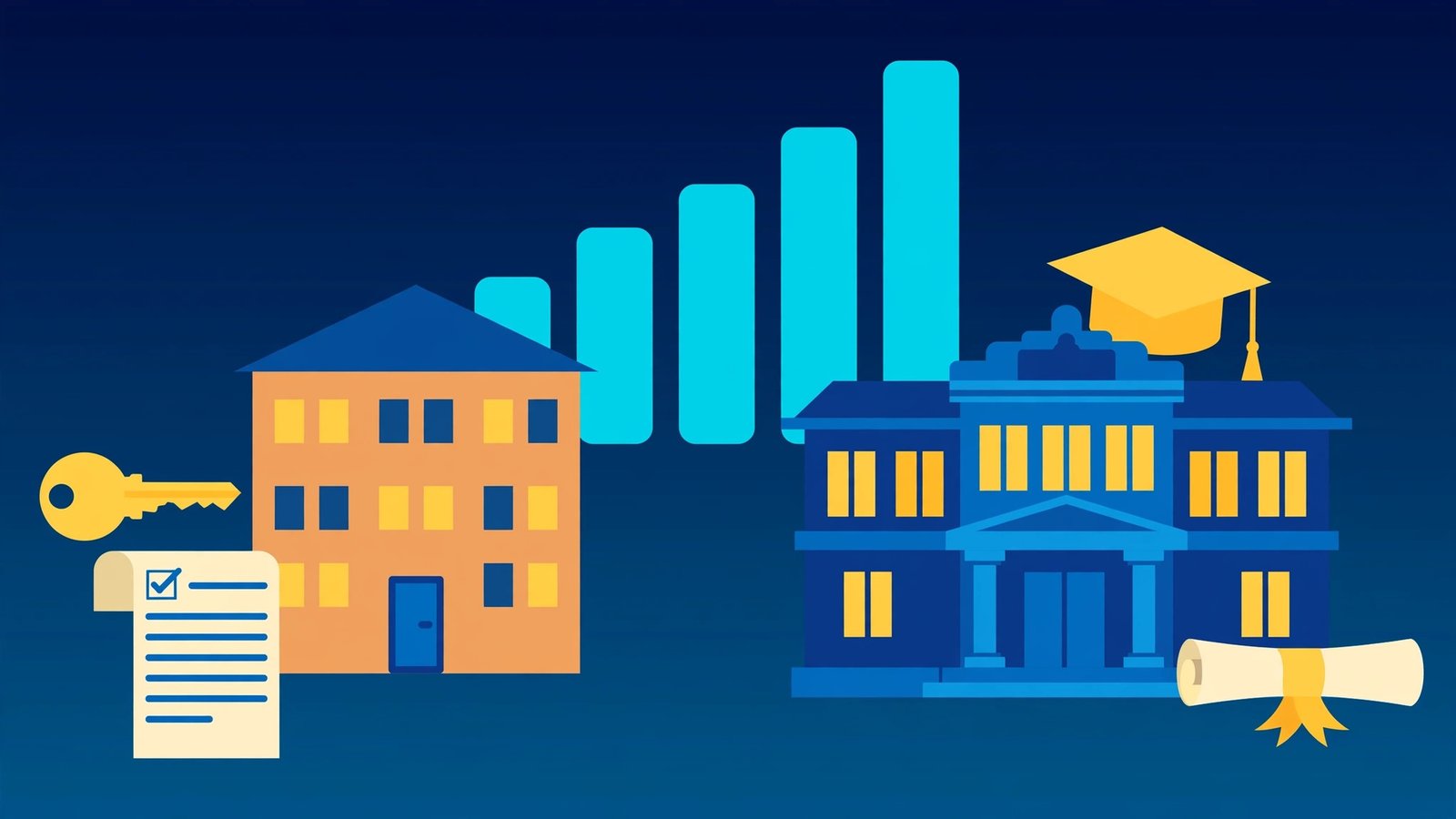
The government considers housing affordable if it costs no more than 30% of your income. But in 2024, one in three American households spent more than that. Among renters, it was worse: over half spent more than 30% of their income on housing. This is where federal housing government assistance programs come in.
The Department of Housing and Urban Development (HUD) runs three main rental assistance programs. All three cap what renters pay at 30% of their income. In one type, renters find their own place while HUD and local public housing agencies cover the remaining 70%. In another, HUD partners with landlords to keep specific units affordable. The third is traditional public housing — buildings constructed by the federal government and managed by local housing agencies.
Altogether, 4.4 million households live in federally subsidized housing. Unlike SNAP, these programs do not expand automatically with demand. As a result, getting in can take a long time: the average qualified applicant waits about 27 months. In 2024, HUD spent $52 billion on these programs — about 0.8% of the federal budget.
Education: Pell Grants, Student Loans and Head Start
Government education support shows up in two places: before kindergarten and after high school. For education government assistance programs after high school, there is federal support in the form of loans and grants. These cover community college, four-year college, trade schools, and even graduate programs.
Borrowers must repay federal student loans, but they carry lower interest rates than private loans. The government subsidizes some of them, meaning it pays the interest while the student is in school. In total, there is $1.7 trillion in outstanding federal student loans, with about $300 billion of that subsidized. Grants, on the other hand, never need repayment. The main examples are Pell Grants for students with financial need. TEACH Grants support future teachers who will work in low-income schools. TRIO programs also help low-income and first-generation students succeed in college.
There is also federal work-study, where students hold part-time jobs ($1.2 billion in spending). Then there is the American Opportunity Tax Credit. It is worth up to $2,500 per year for expenses during the first four years of post-secondary education. About 8.6 million filers claimed it in 2022, at a cost of roughly $3.8 billion. Students unlock grants and loans by completing the FAFSA — the form that determines eligibility from income and household information.
Pell Grants and Head Start
The Pell Grant is the largest federal education grant and can be used at colleges and trade schools. To qualify, students must be US citizens or eligible non-citizens and show financial need. They must also be pursuing their first post-secondary degree and submit the FAFSA. There is no fixed income cutoff — eligibility comes from a formula, and award amounts differ. In the 2024–25 school year, awards ranged from $740 to $7,395. More than 6.4 million students received a combined $34.7 billion. The program expands with demand: spending peaked during the Great Recession, then declined. In 2012, Congress cut maximum eligibility from 18 semesters to 12 to save money. Adjusted for inflation, peak spending was nearly 52% higher than it is today.
Before kindergarten, the main programs are Head Start and Early Head Start. They are free, federally funded programs for low-income families with young children. Early Head Start serves infants, toddlers, and pregnant women; Head Start serves children ages 3 to 5. The Department of Health and Human Services runs Head Start. It began in the 1960s as part of the War on Poverty. In 2024, it served more than 715,000 children.
In that year, a family of four generally qualified with income under $31,200. Families also automatically qualify if they receive TANF or SSI, are homeless, or have a child in foster care. Separate versions serve migrant and seasonal farmworker families and tribal communities. Unlike Pell Grants, which go to schools, Head Start money goes to local organizations — school districts and nonprofits. Families apply to them directly, sometimes facing waitlists. In 2024, the government spent $12.3 billion on Head Start and Early Head Start, about 0.18% of the federal budget.
The Big Picture
Add up all the means-tested programs covered here: they cost the federal government about $1.1 trillion. That is roughly 16% of total federal spending. Many people use more than one program at the same time. As a result, there is no single complete number for how many Americans participate overall. These government assistance programs represent one of the largest areas of federal spending.
One more thing to know: in July 2025, Congress passed a major budget law that changed many of these programs. No one knows the effects yet, since many of the changes don’t take effect until 2027. As a result, some of the rules and figures described here may look different in the future. Before applying for any program, it’s always worth checking the latest official guidance.
FAQs
What does “means-tested” mean?
It means the program checks your income — and sometimes your assets — against a set limit before you can qualify. If you are above the limit, you don’t qualify, no matter what else is true about you.
Do states change who qualifies for these programs?
Yes. The federal government sets baseline rules, but states add their own requirements that affect who gets help and how much. That is why Medicaid, SNAP, and TANF can look different from one state to another.
Can one family use several government assistance programs at once?
Yes. The same household can receive SNAP, Medicaid, and housing help at the same time. This overlap is exactly why there is no single total count of participants across all programs.
What is the difference between a grant and a loan?
Grants, like Pell Grants, never require repayment. Loans, like federal student loans, require repayment — although federal loans usually carry lower interest rates than private ones.
Are these programs guaranteed to stay the same?
No. Congress changed many of them in a July 2025 law, with most changes taking effect in 2027. Eligibility rules and benefit amounts can shift, so always check current official guidance before applying.
Final Words
The United States runs one of the largest systems of government assistance programs in the world. This includes health coverage for more than 90 million people and school lunches for millions of children. The numbers tell you what is happening; they don’t tell you what should happen. Every family has its own story of hopes, plans, and hardships. How much the government should do to help with those? That is for you to decide.
Want more clear, factual guides like this? Browse the latest articles on the ApkThis homepage.